Artificial intelligence in accounting, development of smart financial solutions for accounts connected to Netanik
Infrastructure & Website Technical Manager: Navid Zamani
Project Manager & Graphic Designer: Soheil Mottaghinia
Artificial intelligence in accounting, from information recording to intelligent financial decision making
Hesaban Peyvast, as a comprehensive financial and accounting platform, provides a platform for the integrated management of financial information, accounting operations and business-related processes. In such a context, Artificial intelligence in accounting It can go beyond automating repetitive activities and become a tool to increase accuracy, accelerate information processing and improve financial analysis. The goal of developing smart capabilities is to reduce dependence on manual data entry and provide faster access to reliable data. In this project, Netanik focuses on the design and development of intelligent approaches focusing on the real needs of financial and accounting users. This approach puts artificial intelligence technology at the service of financial processes to improve the user experience and the quality of decision-making together. Netanic Portfolio
The role of artificial intelligence in the development of connected accounts
In financial platforms, a large amount of information is generated in the form of invoices, accounting documents, transactions, reports and operational data. Reviewing and processing this information in completely manual ways can be time-consuming and increase the possibility of human error. Artificial intelligence in accounting provides the possibility of optimizing part of these activities by analyzing the data structure and identifying recurring patterns. In attached accounts, the value of this technology becomes apparent when the smart capabilities are aligned with the organization's accounting structure, financial rules, and workflow. For this reason, the design of AI solutions should be based on the financial logic and operational needs of users.
The goals of developing intelligent capabilities
The goal of making a financial platform smart is not to completely replace the accountant or financial manager; Rather, tools should be provided that allow for more accurate and faster tasks. Artificial intelligence in accounting can play a supporting role in extracting information, categorizing documents, analyzing data and preparing management reports. In this structure, sensitive financial decisions must still be made according to valid rules, user access level and approval of responsible persons. Such an approach helps connected accounts develop smart capabilities in a manageable way and tailored to business needs. The expected result is to create a more consistent experience for users and enable more effective use of financial data.
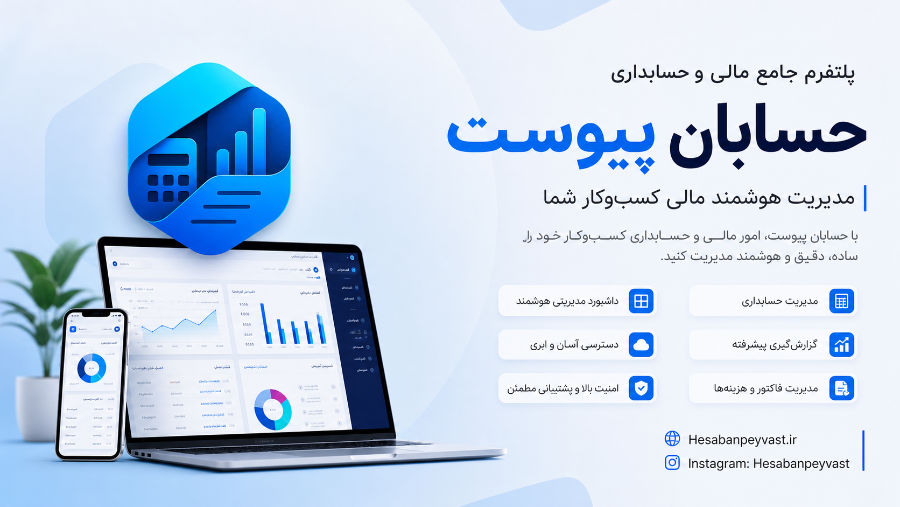
Artificial intelligence architecture in the accounting of the attached accounts
Integration of artificial intelligence with financial infrastructure
One of the most important challenges in the development of artificial intelligence in accounting is connecting new capabilities to the existing structure of financial information. Accounting data must be clearly related to identifiers, fiscal periods, account headings, persons, documents, and recorded transactions. If an intelligent system is designed without understanding these relationships, it may produce information that is apparently acceptable but does not match the organization's financial logic. The architecture of attached accounts should provide the possibility of controlled use of the required data and have a clear boundary between artificial intelligence proposal and definitive registration of information. This separation simplifies the gradual development of new capabilities and increases the possibility of evaluating the quality of the outputs.
The main layers of the intelligent system
To design an extensible structure, AI capabilities in accounting can be organized in several complementary layers. Each layer has a specific responsibility and communicates with other parts through defined interfaces. This structure helps to develop document processing, data analysis and intelligent response generation without disrupting the main logic of accounting. Also, it provides the possibility of recording processing records and checking the outputs. The main components of such an architecture are listed in the table below.
System layer | The main task | input | output |
|---|---|---|---|
Get information | Data collection and financial documents | File, form and system data | Information ready to be processed |
Intelligent processing | Data extraction and classification | Documents and structured information | Extracted data and suggestions |
Financial rules | Compliance control with accounting logic | Processed data and defined rules | The result of the control and the items that need to be checked |
Analysis and reporting | Identify trends and prepare a summary | Authorized financial data | Analytical report and indicators |
Security and surveillance | Access management and event registration | System requests and operations | Traceable records and access control |
Intelligent processing of financial documents in attached accounts
Extracting information from invoices and documents
An important part of accounting activities is dedicated to receiving and reviewing financial documents. Invoices, receipts and cost documents may be received in the form of image files, PDF or digital documents, and their information needs to be transferred to standard structures. Technologies such as optical character recognition (OCR) and artificial intelligence models can be used to extract information such as date, amount, document ID and counterparty details. In the smart solution of the attached accounts, the extraction output must be provided along with the possibility of viewing the original document and checking the reliability of the system. This method allows the user to check and correct uncertain items before final registration.
Document processing process from receipt to approval
In order for artificial intelligence in accounting to become a reliable part of the workflow, document processing must have a certain phasing. In this process, the system first extracts basic information and then compares it with expected patterns and related rules. Any item that needs to be reviewed in terms of amount, date, transaction party information or document structure should be referred to the user. The final registration of information should also be done according to the access level and approval policies defined in the organization. The proposed process includes the following steps:
Receiving the document through authorized channels and registering a unique ID for it.
Identifying the type of document and extracting the main information using OCR and intelligent processing models.
Data standardization and checking the completeness of necessary fields.
Matching extracted information with existing data and accounting rules.
Displaying suspicious or incomplete items for review and correction by the user.
Registering or sending information for final approval according to the organization's workflow.
Intelligent accounting automation and reduction of repetitive activities
Identify processes suitable for automation
Not all accounting activities are suitable for full automation. Processes that have clear rules, specific inputs, and measurable outputs are usually a good starting point for developing intelligent automation. For example, initial classification of documents, extraction of invoice information, drafting of document description and identification of incomplete items can be done with the help of artificial intelligence. In contrast, sensitive operations or those that require expert judgment should have human control and an appropriate approval mechanism. This separation makes the use of artificial intelligence in accounting more operational and reduces the possibility of errors in critical processes.
Applications of automation in attached accounts
Automation capabilities should be prioritized based on the volume of operations, the repeatability of tasks, and the importance of each process. Once these needs are identified, workflows can be defined that cover information receipt through initial control and referral for approval. In this structure, the system should automatically execute an operation only when the necessary rules and permissions are specified in advance. More complex activities can also help users by generating actionable offers. Examples of suitable applications include:
Automatic extraction of basic information from invoices and financial receipts.
Classification of documents based on type, subject and registered information.
Identification of incomplete fields and possible discrepancies in input data.
Preparing a draft description of the document based on the available information.
Reminder of incomplete documents or operations requiring approval.
Prepare management summaries of authorized and up-to-date financial data.
Intelligent analysis of financial data and management reporting
Converting accounting data into management insight
Financial information creates more value when managers can understand the relationship between the numbers and the actual state of the business. Conventional reports usually display recorded status, but intelligent analytics can help identify trends, unusual changes, and relationships between indicators. Artificial intelligence in accounting provides the possibility of generating analytical summaries and answering specific questions by examining historical data and authorized operational information. For example, the manager can inquire about changes in the costs of a period, the process of receiving receivables or the difference in the performance of different departments. The validity of these analyzes depends on the quality of the data. Accurate definition of indicators and transparency of the calculation method is dependent
Smart reporting with natural language
One of the practical capabilities of artificial intelligence is to convert the everyday questions of users into processable requests to prepare reports. In this case, instead of manually searching through multiple pages and filters, the user asks his question in natural language. The system must recognize the user's intent, determine the relevant index, and use only the data that the user has permission to access. The response should also clarify the time frame, basis of calculation and possible limitations of the information. Such a feature can simplify access to management information, without sacrificing the accuracy and ability to review reports for ease of use.
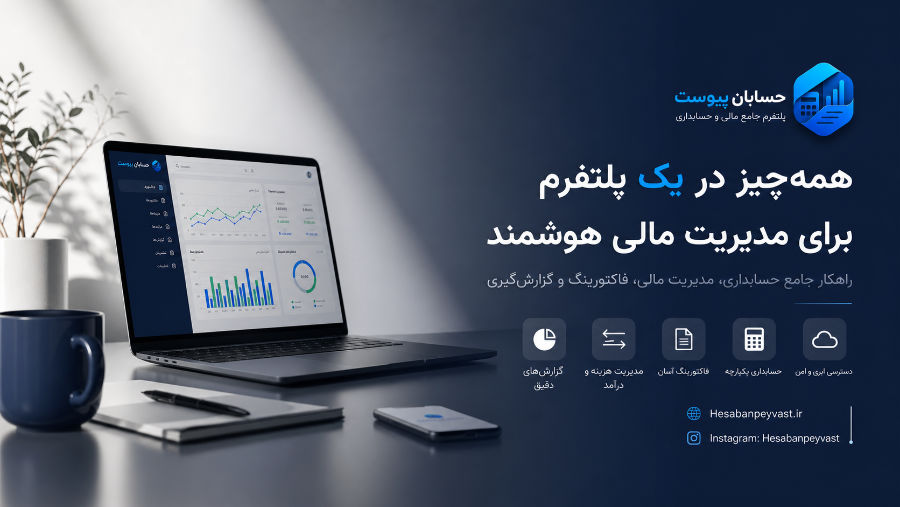
Discovering discrepancies and identifying unusual patterns
Detecting inconsistencies in financial data
Financial discrepancies are not always due to malpractice and may be caused by incorrect data entry, duplicate registration, delay in updating, or differences in the way documents are recorded. Artificial intelligence methods can identify things that differ from the usual behavior of data by examining common patterns. For example, possible duplicate entries, unusual amount changes or inconsistencies between related information can be flagged for further investigation. These outputs should be considered warnings or suggestions for investigation, not definitive proof of an error or violation. The final decision must be made according to the supporting documents, accounting rules and the review of the responsible expert.
Manage alerts and prioritize reviews
If the system generates too many unimportant alerts, users will gradually lose their sensitivity to important alerts. For this reason, the design of the prioritization mechanism is very important along with the anomaly detection model. Each warning should have a specific reason and provide the user with the necessary information to check it. Also, recording the results of user reviews can be useful in evaluating the quality of alerts and improving system settings. The indicators that can be used to monitor this feature include the following:
Number of alerts generated per fiscal period.
The ratio of confirmed alerts to reviewed alerts.
The amount of unnecessary warnings and undetected cases.
Average time to handle each flagged item.
Distribution of alerts based on discrepancy type and importance level.
The rate of repetition of similar errors after correcting the processes.
Financial and accounting smart assistant
Answering the specialized questions of users
The smart financial assistant can help users find the information they need faster and better know the way to perform certain tasks. This assistant can answer users' questions based on valid product documentation, internal guides and authorized system information. For example, a user may ask how to perform a process, the meaning of a status, or the path to a certain report. In questions that depend on the actual data of the appended accounts, the answer should be derived from up-to-date and authorized information, not from guesswork or general information from the language model. The separation between general guidance, account-specific information and executive operations is an important part of the design of such an intelligent assistant.
Quality control of assistant answers
In finance, the smooth and convincing answer is not necessarily the right answer. For this reason, the smart assistant must be connected to reliable sources and clearly state its limitations in cases where it does not have enough information. For documentation-based responses, displaying the source or access path to the information can allow the user to review. Also, performing sensitive operations should not be done only based on a text command and without controlling the permissions. Netanik's proposed approach is to use artificial intelligence as a controllable assistant, which, while increasing the speed of response, maintains the possibility of review and accountability.
"Artificial intelligence in a financial platform creates real value when, in addition to speed and ease, it is aligned with accounting logic, information security and the ability to review results. Our goal is to transform financial data into actionable information; without leaving the control and decision-making responsibility out of the hands of the users."
Information security and confidentiality in accounting artificial intelligence
Protection of sensitive financial data
Accounting information may include revenue and expense details, customer information, business documents, and sensitive organizational data. Therefore, any artificial intelligence capabilities in connected accounts must be designed from the ground up with security and privacy considerations in mind. The principle of minimal access, limiting the data sent to the models and preventing the disclosure of unnecessary information are among the most important requirements of this structure. If external artificial intelligence services are used, the terms of data processing, data storage and data usage policies should be reviewed prior to use. Also, sensitive information should not be included in model language requests without proper authorization and controls.
Access control and record keeping
The security of an intelligent system is not only limited to protecting data in transit. Each user should only have access to information and operations appropriate to their role, and the smart assistant should follow the same restrictions. Important requests, responses, and operations should be logged in such a way that it is possible to review events and track changes. Along with these things, the policies of data storage and deletion and records access management should also be clear. Compliance with these principles helps to create a reliable platform for the development of artificial intelligence in accounting.
Netanik's role in the development of smart solutions for bank accounts
Linking software engineering with artificial intelligence
Developing intelligent capabilities for a financial platform is not limited to choosing a language model or adding a dialog interface. This work requires knowledge of business processes, software architecture design, data management, definition of control rules, and quality evaluation of outputs. With a hybrid approach to technology development and artificial intelligence, Netanik focuses on establishing a connection between intelligent capabilities and operational needs of the platform. This approach helps to design solutions from scratch with security, maintainability and expandability in mind. As a result, AI becomes a purposeful part of the product, not a feature separate from its core processes.
Staged development and performance evaluation
To maintain quality, intelligent capabilities must be tested with realistic scenarios, controlled data, and clear evaluation criteria. The performance of the model in extracting information, the quality of the suggestions, the accuracy of the answers and the need for human modification are among the indicators that can be evaluated. The results of these reviews should be further analyzed before expanding the functionality to users, and high-risk cases should remain under proper control. Also, continuous post-release monitoring helps detect changes in data quality or user behavior in a timely manner. This evaluation cycle provides the basis for gradual improvement and sustainable development of smart solutions for connected accounts.
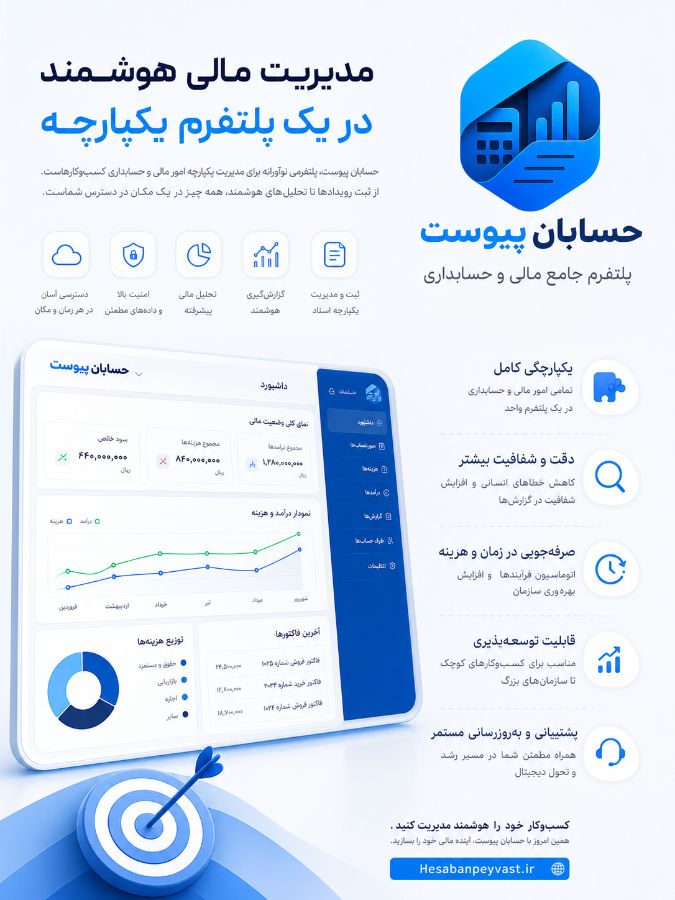
summary; The future of artificial intelligence in accounting
Moving from accounting software to a smart financial experience
Combining artificial intelligence with a comprehensive financial platform can transform the way users interact with data and accounting processes. From intelligently extracting documents and automating repetitive activities to analyzing financial trends, identifying discrepancies, and answering user questions, each feature must solve a specific problem. In the attached accounts, the development of these capacities will be effective when information accuracy, data security, and the possibility of human control are at the center of the design. Such an approach paves the way for the responsible use of artificial intelligence in accounting and provides a more informed decision for users. The future of this field depends on the cooperation between financial knowledge, Software engineering and smart technologies is dependent
The value of cooperation between Netanik and the attached accounts
The development of smart solutions will be more successful when the technology is aligned with the real needs of the product and the expectations of the users. Focusing on extensible architecture, controllable workflows, and purposeful use of data enables the creation of capabilities that can be used and evaluated in practice. Netanik's approach in the connected account project is based on this link between technical development and intelligence. This path can help to simplify financial processes, better access to information and improve user experience. The ultimate goal is to use artificial intelligence to enhance platform capabilities and support more accurate decisions in financial and accounting environments.