Smart Security Monitoring System Development of a video surveillance solution with artificial intelligence and Netanik
Project type: Intelligent security monitoring system
Client: Safe watch
Area of activity: Security, protection and video surveillance services
Main keyword: Intelligent security monitoring system
Infrastructure & Website Technical Manager: Navid Zamani
Project Manager & Graphic Designer: Soheil Mottaghinia
intelligent security monitoring system; From video surveillance to intelligent analysis of events
Security and protection companies use an array of CCTV cameras, access control equipment, alarm systems, and manpower to manage sensitive environments. With the increase in the number of cameras and the expansion of the surveillance range, continuous review of images and quick identification of important events becomes a serious challenge. Intelligent security monitoring system Using machine vision, video analysis, and intelligent event processing, it can transform large amounts of visual information into structured and reviewable alerts. The goal of this concept project for the hypothetical company Dedeban Aman is to design a solution that will strengthen human monitoring, reduce the time to detect critical events, and make the management of security operations more accurate. Netanic Portfolio
Challenges of video surveillance in security companies
In a security control center, operators may be responsible for reviewing tens or hundreds of live images at the same time, while also managing alerts from other systems. This volume of information can increase fatigue, make it difficult to detect infrequent events, and delay the investigation of important alerts. On the other hand, image storage alone has limited operational value unless it is possible to quickly search, categorize, and retrieve related events. The intelligent security monitoring system can help the operator focus on more important things by prioritizing events and providing relevant visual evidence.
Objectives of the safe watch project
In this project, the goal is not simply to add an artificial intelligence tool to the existing infrastructure, but to design an integrated process for image acquisition, event analysis, alert generation, and investigation result recording. The system should be able to be configured based on the security policies of each location and differentiate between normal events, cases requiring investigation, and high-priority alerts. Also, privacy protection, access control, the ability to track decisions and the possibility of human review should be included in the solution architecture from the beginning. The expected output is an extensible technical plan for improving security operations, not a claim of actual implementation or a guarantee of preventing all incidents.
Technical architecture of intelligent security monitoring system
The design of an intelligent security monitoring system requires a multi-layered architecture so that image acquisition, artificial intelligence analysis, alarm management and information storage can be done in an orderly manner. Directly connecting all cameras to an AI model, regardless of processing capacity and network limitations, may cause operational cost and complexity. For this reason, in the secure surveillance design, processing close to the source of the image, central management of events and segregation of responsibility of components are considered as design principles. The final selection of technologies should be based on the number of cameras, image quality, environmental conditions, data retention requirements, and operational budget.
Image receiving and preparation layer
In the first layer, images are received from cameras or the existing video management system and will be checked for quality, frame rate and communication status before analysis. Depending on the infrastructure, standard video streams or interfaces supported by the equipment can be used to reduce dependency on a specific manufacturer. If needed, pre-processing such as selecting appropriate frames, resizing the image and removing unnecessary data can control the processing load. This layer should record the state of disturbance when the network is out of reach or a camera is out of reach and avoid creating a false impression about the surveillance being active.
AI analysis layer and event management
In the analysis layer, machine vision models are used to identify objects, check motion and detect patterns defined within the allowed range. Model results should be converted into events with time, camera ID, location, possible event type, confidence level and link to video evidence. The rules engine then matches this information with the policies of each environment to reduce duplicate alerts and prioritize critical events for operator review. This distinction between model analysis and operational decision is important because AI output alone should not be used as a definitive basis for accusing people or taking risky actions.
System layer | The main responsibility | Proposed technology or method | output |
|---|---|---|---|
Get the image | Connect and control the video stream | Compatible protocols and flow management | Processable image |
Image analysis | Identifying objects and movement patterns | Machine vision and video analysis | Analytical results |
Rules engine | Event evaluation based on security policy | Conditional rules and risk scoring | Priority alert |
Operations management | Record, refer and track alerts | Dashboard and workflow | Event file |
reporting | System performance and quality analysis | Database and analytical tools | Management report |
Detection of suspicious events with intelligent security monitoring system
One of the important capabilities of the intelligent security monitoring system is the analysis of events that have a clear definition and can be evaluated. These events can include entering a restricted area, crossing a virtual line, making an unusual stop in a designated area, or being in an environment outside of permitted hours. The detection accuracy depends on the image quality, camera installation angle, ambient light, density of people and how to set the model. Therefore, each capability should be tested in the target environment and the conditions under which the detection is unreliable should be clearly documented.
Definition of security scenarios
In the requirements analysis phase, each security scenario must be converted into a set of observable conditions and operational rules. For example, entering a protected area can be assessed based on crossing a certain image border during defined hours, but the presence of a person in the image alone should not be considered as a violation. Setting the allowed ranges, timing, alert level and referral path to the operator prevents irrelevant alerts. This design should be done with the security officer of the complex so that the logic of the system is in harmony with the actual instructions of the site.
The process of converting an image into a reviewable alert
In order for the output of image analysis to be usable in daily operations, the system must have a transparent process from the initial diagnosis to the registration of the examination result. In this model, AI detects a potential event, organizational rules evaluate it, and then an alert is sent for human review. The operator can view the relevant evidence, record the result of the investigation and, if necessary, refer the incident to the relevant authority. The suggested steps of this process are:
Receive image and check the health of the video stream.
Identifying a defined image or motion pattern.
Event matching with scope, time and security policy.
Create alerts with evidence and confidence levels.
Checking the alarm by the operator and recording the final result.
Use evaluation data to improve system settings.
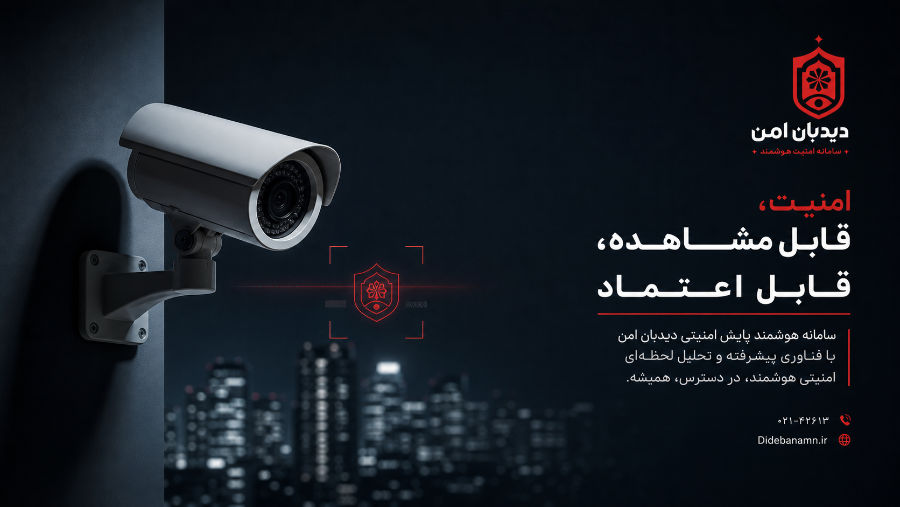
Analysis of behavior and movement in protected environments
Motion analysis can help identify events that cannot be detected by examining a still frame. The intelligent security monitoring system can check changes in location, direction of movement and duration of presence in a certain area within the framework of defined scenarios. However, the natural behavior of individuals varies greatly in different environments, and unusual movement does not necessarily indicate a threat. For this reason, the results of motion analysis should be considered as an indication for further investigation, rather than a definitive judgment about the intent or identity of the individuals.
Analysis of range and direction of movement
By defining virtual lines and sensitive areas on the image, it is possible to check the crossing of certain boundaries or entering into unauthorized areas. This capability has potential applications in environments such as warehouses, industrial sites, office centers and controlled facilities, especially when access rules and hours of operation are defined in advance. To avoid false alarms, factors such as shadow, light reflection, equipment movement and changing environmental conditions should be included in technical tests. In complex environments, it may be necessary to combine several analytical methods and leave uncertain cases for human review.
Aggregation analysis and abnormal conditions
In some environments, a sudden increase in the density of people or the formation of an accumulation in a certain area can require a faster investigation. The system can evaluate the approximate density, changes in the number of people and duration of presence in the defined areas, provided that the image quality and model constraints allow such an analysis. Alert thresholds should be adjusted according to the type of environment; Because natural density in a busy entrance is not the same as a confined industrial space. Responsible use of this capability requires that alerts be interpreted with actual site conditions and that the final decision be left to the human operator.
Operational dashboard and management of security alerts
Even the most accurate analytics model provides limited value to the security team without the right operational interface. The dashboard of the smart security monitoring system should display important information without unnecessary complexity and guide the operator through the large volume of alerts to the priority items. Simultaneous display of camera status, event list, recording time, priority level and handling status creates a more consistent operational view. In this design, the user experience is considered a part of the security architecture; Because unclear alert or complicated workflow can delay processing.
User interface design for operators
The main page should separate the overall system status from the status of pending events so that a technical malfunction is not confused with a security alert. Each alert should contain enough information to make a preliminary decision, including the location of the camera, the time of occurrence, the reason for the alert, and the associated image or clip within the authorized access range. Time, place and event type filters help the operator find records faster and check related files. Also, the design should be suitable for long-term use and avoid increasing the cognitive load of operators by reducing unnecessary notifications.
Alert handling workflow
In the proposed system, each warning has a specific status; For example, new, under review, approved, rejected or referred. The change of status should be recorded along with the time, user ID and necessary explanation so that it is possible to follow the decisions in the next steps. If an event is confirmed, the system can notify the relevant official or send the case to the next stage according to the instructions of the collection. This workflow helps the organization to define responsibilities more clearly and evaluate the quality of care with measurable criteria.
Smart security assistant and event search
In addition to live analysis of images, intelligent search in security records can reduce the time of investigating past incidents. An intelligent security assistant can allow the operator to ask questions such as "display the events recorded at the north entrance during a specified time period" and retrieve the results based on the system's authorized data. This capability should rely on available recorded information, metadata, and records, and in the absence of sufficient information, clearly state the limitations of the response. The response generated by the language model should also be linked to verifiable records to avoid making up details or providing unsupported results.
Searching for meaning in security records
In the traditional search method, the user usually needs the exact time, camera ID, or specific type of event. Semantic search can transform natural queries into structured filters, making it easier to find relevant reports. For example, instead of manually searching through a long list of alerts, the user can request events related to a range and time frame. However, the results must be verifiable in terms of time, source, and relevance to the request, and the assistant must not grant access wider than the user's authorized level.
Answering based on valid data
To reduce incorrect responses, the assistant should first retrieve the authorized records and then provide the response based on the same information. If the question is related to information outside the system or there is not enough data, the appropriate answer is to announce the limitation and suggest the investigation path. Also, all sensitive requests and responses must be managed in accordance with the organization's event logging and data retention policy. In this architecture, the assistant plays the role of information search and retrieval tool and does not replace the operator, security manager or formal decision-making processes.

integration Intelligent security monitoring system with existing equipment
Many security companies use a variety of infrastructures for video surveillance, access control, event logging, and communication with operators. Completely replacing this equipment may be costly and cause operational disruption; Therefore, the smart security monitoring system should be designed as compatible with the existing architecture as possible. The possibility of integration depends on equipment protocols, access level, technical documentation and software limitations of each environment. Before starting the development, it is necessary to check the compatibility of the selected equipment in a test phase and identify the things that need to be changed.
Connecting to the video management system
If the existing video management system has a compatible interface or protocol, the image stream and necessary metadata can be transferred to the analysis layer. This method allows the use of the current infrastructure and prevents the creation of independent and scattered paths for image management. However, access permissions, limitations on the number of streams, network latency, and processing capacity must be evaluated before exploitation. Any disconnection or disturbance in image reception should also be recorded as an independent technical condition and displayed on the dashboard.
Connection to access control and alarm systems
If secure and authorized interfaces exist, video events can be matched with data from an access control or alarm system. For example, registering an authorized entry at a point can help better interpret an image event, but this matching must be done based on timing and valid identifiers. Sensitive actions such as unlocking, restricting access or activating protective equipment should not be left solely to the output of a probabilistic model. In such cases, the organization's approved policies, technical controls and human verification must play a decisive role.
Data security and privacy in smart security monitoring system
Video surveillance systems deal with data that may contain sensitive information about people, locations, and traffic patterns. Therefore, information security and privacy should be considered at all stages of the design of a smart security monitoring system, not just added to it after development. The principle of minimum access, encryption of communications, registration of user activity and determination of data retention period are among the controls that can reduce the risk of unauthorized access. Implementation policies should also be in harmony with the legal requirements, the type of environment under supervision and the responsibilities of the operating company.
Access control and image protection
Access to live images, archives, and security reports should be defined based on organizational roles, and each user should see only the information needed for their tasks. Communications between cameras, servers, and management panels should be protected with secure methods, and default user accounts or unnecessary accesses should be removed. Logging the observation, extraction and modification of sensitive information can help identify abuse and investigate internal incidents. Also, the retention period of the images must be specified and the deletion or archiving of the information accordingly Approved policy and legal requirements be done
Responsible use of artificial intelligence
Image models may not perform the same in different conditions, and their recognition quality is affected by light, camera angle, image coverage, and environment characteristics. Therefore, before operational use, the performance of the model should be evaluated on representative samples from the target environment and its limitations should be informed to the relevant authorities. Risky capabilities such as identifying people's identity or inferring personal characteristics should not be entered into the system without clear necessity, legal basis and independent evaluation. The proposed approach of safe watch is based on the analysis of defined events, data minimization and preserving the human supervisory role.
"AI in security creates real value when, in addition to detecting events, it can provide actionable information, clearly explain its warnings, and put the ultimate decision in the hands of the responsible force."
Measuring the performance of the intelligent security monitoring system
The evaluation of the intelligent security monitoring system should not only focus on the number of generated alerts or image processing speed. A system may generate many alarms, but if a large proportion of them are unrelated, the workload of operators increases and the confidence in the system output decreases. For this reason, performance measurement should simultaneously consider detection accuracy, false alarm rate, handling time, infrastructure stability, and operator experience quality. The final indicators should also be selected based on the operational needs of each customer, and their target value should be determined after evaluating the baseline.
Technical and operational indicators
In the test phase, a set of real events or controlled samples should be prepared with valid labels to compare the output of the model with the reference result. The evaluation needs to cover different conditions such as day and night lighting, occlusion of part of the image, environment density and camera angle differences. In addition to detection accuracy, processing latency, percentage availability of streams, and service stability under expected workload should be measured. These results will be the basis of the decision about modifying the model, changing settings or experimentally expanding the system.
Suggested indicators for management reporting
In order for managers to make decisions about the operational value of the project, the report must link technical metrics to understandable organizational outcomes. Each index needs to have a clear definition, calculation method, reporting interval and responsible for measurement so that periodical comparison remains valid. The suggested criteria include the following:
Detection accuracy: Proportion of correctly identified events in the defined test set.
False alarm rate: Proportion of alerts that are not recognized as valid events after review.
Processing time: The time interval between recording the alarm and recording the result of the check by the operator.
Image stream stability: Availability of video streams required by the system.
Operator workload: The number of alerts that need to be reviewed in a given time frame.
Record recovery quality: The degree of relevance and accuracy of results in searching for past events.
These metrics should be compared to a valid baseline to determine how the system has changed in practice. Without trial runs and data collection, it is not possible to claim a specific percentage increase in accuracy or reduction in costs. Also, the performance of a model in a laboratory environment is not necessarily replicated in the same way in a real location. The final report should show both positive results and limitations and things that need correction.
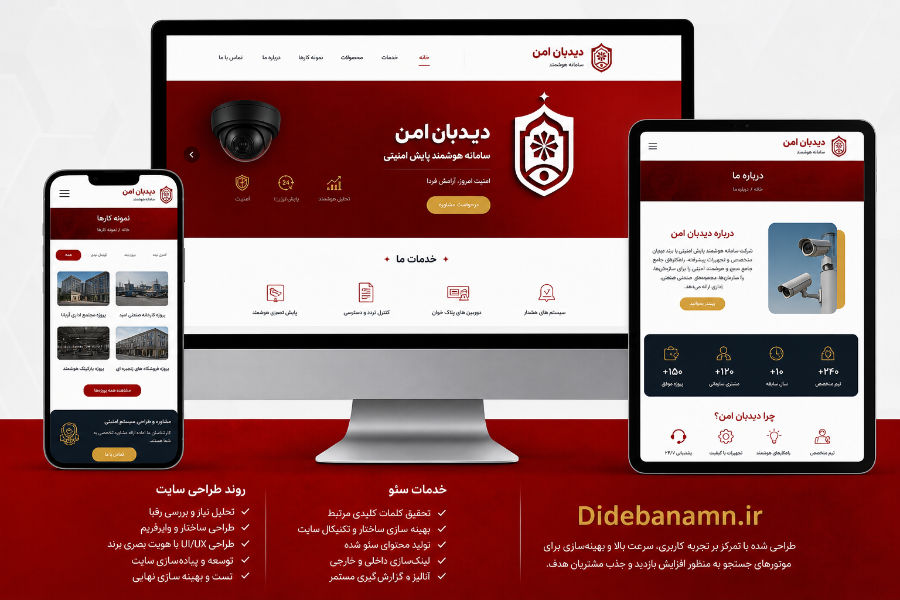
The path of implementation and development of intelligent security monitoring system
To reduce the risk of the project, the development of the intelligent security monitoring system should be done step by step. Starting simultaneously with a large number of cameras and complex scenarios makes it difficult to assess the cause of errors and control costs. The implementation of a limited sample with clear criteria provides the possibility of measuring the compatibility of the equipment, the quality of the model and the fit of the workflow with the needs of the operators. After reviewing the results, it is possible to decide on the development of capabilities and expansion of the system to other sectors.
Proposed stages of project implementation
In the first step, the operational needs, technical limitations and data protection requirements will be identified and priority scenarios will be selected. Then, a test case with a limited number of cameras and a set of defined events is developed to check the quality of the analysis and the performance of the dashboard. After evaluating the results, connecting to existing systems, setting access levels, and defining operational workflows are prioritized. The proposed stages of development are:
Analysis of infrastructure, security needs and target scenarios.
Selecting equipment and checking the technical compatibility of image streams.
Prototype development of image analysis and alert management.
Conducting controlled tests and measuring performance indicators.
Modification of models, warning rules and user experience.
Phased deployment, operator training and continuous monitoring.
Expandability and long-term maintainability
After initial setup, the system should allow adding new cameras, scenarios, and data sources without completely redesigning the architecture. The version of the models, the settings of each camera and the changes of the rules should be recorded so that in case of problems, it is possible to review and return to the valid settings. It is also necessary to monitor the quality of inputs and periodically check for false alarms; Because changing the light, installing a new camera or changing the layout of the environment can affect the performance of the model. Consequently, system maintenance should be part of the customer's operational plan and not just limited to fixing technical failures.
Netanik's role in designing artificial intelligence solutions for security and protection
Designing an artificial intelligence solution for a security company, a combination of process analysis, Software architecture, development of intelligent models, user experience design and risk management. In this conceptual project, Netanik is responsible for the role of designer and developer of the solution, and its goal is to transform operational needs into an evaluable, expandable system that fits the customer's infrastructure. This approach is in line with Netanik's AI department's focus on process intelligence and connecting artificial intelligence models to real business applications. The final technology selection should be made after reviewing the infrastructure, security requirements and test sample results.
Combining technical and operational expertise
In such a project, the development of artificial intelligence model alone is not enough and must be accompanied by stable infrastructure design, clear user interface and followable processes. An analysis of the employer's needs determines which events are worth identifying and which capabilities may create disproportionate cost or risk. Then the technical team can design the processing architecture, data management method and model evaluation method based on the actual needs. This coordination between analysis, engineering and user experience reduces the possibility of the final solution being far from the daily needs of users.
Expected output of the project
The output of this conceptual project is a blueprint for an intelligent security monitoring system that combines event analysis, alert management, records retrieval, and access control into a coherent architecture. The final value of the solution should be determined through operational testing, measurement of agreed indicators and user evaluation. In case of real development, this project can be implemented in stages and according to the infrastructure capacity and policies of each organization. With an engineering and responsible approach to artificial intelligence, Netanik helps businesses transform technology from a display capability into a practical tool for managing and improving processes.